
A scheduled test series with a published calendar — and a rank that only counts if you sat it on time.
Papers open on their published dates, one at a time, each assembled from the freshest question bank just before it opens. Sit one inside its ranked window and you place among everyone who sat the same paper that week. Sit it late and it still counts for you, in full.
How it works
Read the calendar before the season starts
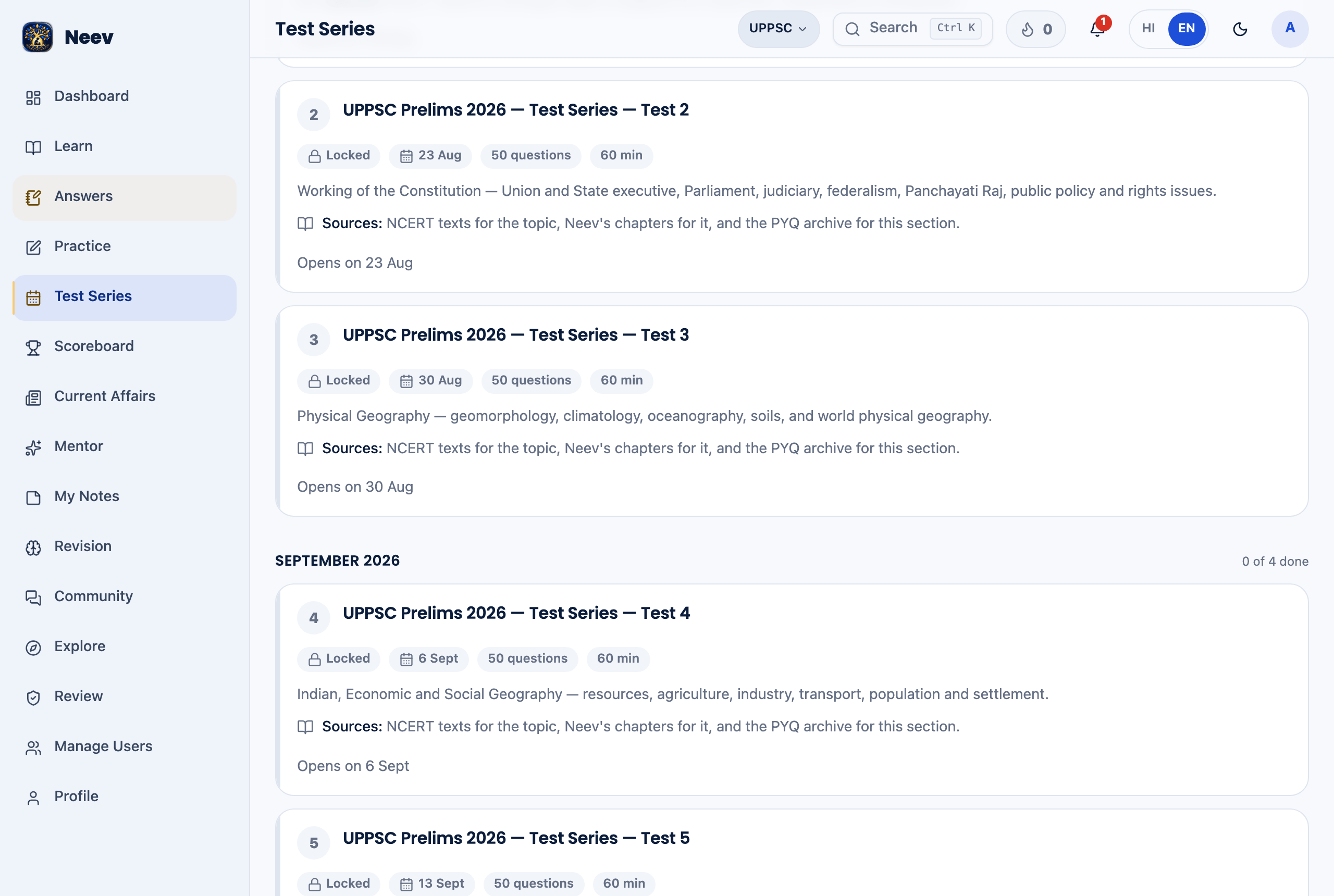
The whole series is published up front — every paper with its date, the topics it covers and the sources it is drawn from, grouped by month. It is a study plan first and a list of dates second, so you always know what to finish before the next paper opens.
The paper opens on its date, and only then
Nothing unlocks early, for anybody. Each paper is assembled shortly before it opens, so it draws on the newest questions in the bank — including current affairs from the weeks just gone.
Sit it, and see where you stand
Submit inside the ranked window and your result carries your rank and the size of the cohort you are ranked in. Submit later and you get the same score, the same per-question review and the same topic analysis — just no rank.
Built like a real test series, not a folder of mocks
Postponement, never preponement
The rule serious institutes publish for their own series, implemented exactly: a paper is locked until its date and open forever after it. Falling a week behind costs you the rank on that paper — never the paper itself.
A full season, from fundamentals to full-length
The calendar moves the way a preparation year does — fundamental papers first, then applied and sectional ones, then full-length papers as the exam closes in, with current affairs folded into the mix rather than quarantined into one test.
Full-length papers follow the commission's own pattern
Question count, duration and negative marking come from the exam's notified structure rather than a house style, and every paper's topic mix is balanced against real past-year weightage instead of whatever happened to be in stock.
Papers you have not already seen
Assembly draws only from the approved question bank and prefers questions you have not been served earlier in the same series, so one paper does not quietly repeat the last one.
Frequently asked questions
Prepare against a calendar, not a to-do list
Start free today, and step up to Max when you want the scheduled series and the ranks that come with it.
Start free